
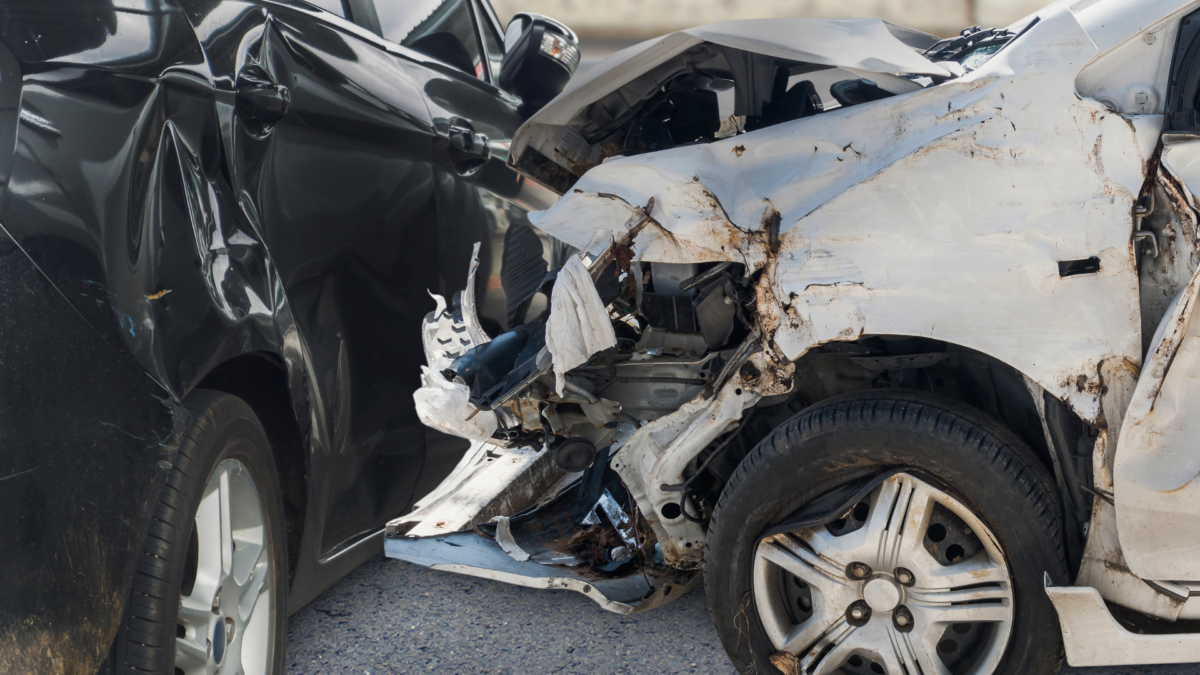
A side-impact crash can leave you with serious injuries, and two drivers giving different accounts of the intersection. Determining who is at fault in a T-bone accident can get complicated.
A driver who entered the intersection without the right-of-way may be responsible, but the striking driver can also be at fault for speeding, driving recklessly, running a light, or operating a vehicle while impaired. When each driver gives a different account, the insurance company may begin assigning blame before important evidence has been collected.
Merrick Brock, PLLC, helps injured drivers understand what the traffic rules, physical evidence, and available video show about a Richmond intersection crash. We handle personal injury claims on a contingency-fee basis, so you pay no upfront attorney fees, and we receive a fee only if we recover compensation for you.
Contact us for a free consultation to discuss the collision and determine your legal options.
Who Is Usually Responsible for a T-Bone Accident?
Fault in a T-bone crash usually turns on why one vehicle entered the other’s path and whether either driver was operating unsafely. Here are common T-bone accident scenarios and who may be at fault.
Driver Ran a Red Light
A driver who enters the intersection at Broad Street and Belvidere Street near VCU after the light turns red may be responsible if that violation places another vehicle in its path and causes a side-impact crash.
Virginia requires traffic facing a steady red signal to stop and remain stopped, except when a turn is legally permitted after stopping. A driver facing a green light may proceed but must still yield to vehicles and pedestrians already lawfully within the intersection.
When both drivers claim to have had a green light, fault may depend on witness accounts, signal timing, vehicle data, and photographs showing the point of impact and final vehicle positions. The fact that one vehicle struck the side of the other does not establish which driver disobeyed the signal.
Collision at a Stop Sign, Driveway, or Uncontrolled Intersection
The right-of-way rule depends on how the intersection is controlled.
- Stop or yield sign. A driver must stop or yield as directed and wait until entering is safe.
- Driveway or parking-lot exit. A driver entering a public road from a private entrance must stop and yield to traffic already on the road. In Richmond, this rule may apply when a motorist leaves Southside Plaza for Hull Street or Belt Boulevard or exits the Shops at Stratford Hills onto Forest Hill Avenue.
- Uncontrolled intersection. When two vehicles arrive at approximately the same time, the driver on the left generally must yield to the driver on the right.
In a T-bone crash, the driver whose vehicle was struck on the side may still be at fault if they entered the intersection or roadway without yielding and crossed into another vehicle’s path. The location of the damage shows where the vehicles collided, not which driver had the right-of-way.
Left-Turn Crash
Fault depends on whether the turning driver yielded as required and whether the approaching driver complied with traffic laws. A protected turn signal, unlawful speed, a red-light violation, or an unsafe lane movement can change which driver had the right-of-way.
To determine fault, the evidence may need to show the signal phase, each vehicle’s speed and path, the point of impact, available sightlines, and whether either driver had time to avoid the collision. Damage to one vehicle’s side does not, by itself, establish who caused the crash.
Reckless or Unlawful Driving
A driver who technically had the right-of-way may still bear responsibility when reckless or unlawful driving helped cause the crash.
Virginia broadly defines reckless driving as operating a vehicle in a manner that endangers life, limb, or property, regardless of the posted speed limit. Excessive speed, driving against traffic, passing where it is unsafe, or making an abrupt lane change near an intersection may leave another driver without enough time to react.
Distracted Driving
Distraction matters when it helps explain why a driver failed to see a traffic signal, notice another vehicle, yield the right-of-way, or react before impact. Either driver may have been distracted, so the fault depends on how that lapse affected the sequence of events.
Evidence may include:
- Witness accounts,
- Surveillance footage,
- Phone records,
- Vehicle data, or
- The diver’s own statements.
The key question is not simply whether a driver was driving and using a phone (which is prohibited under Virginia law), navigating, reaching for an object, or otherwise had their attention diverted from the road, but whether that distraction contributed to the T-bone collision.
Driver Fatigue
Yes. Fatigue may contribute to a fault if it slows a driver’s reaction time, reduces awareness, or causes the driver to miss a red light or stop sign.
Unlike alcohol impairment, tiredness may not show up in an obvious test result. Evidence may instead include the driver’s statements, work schedule, travel history, witness observations, or video showing delayed braking. Simply saying that a driver appeared tired is not enough; the evidence must connect the fatigue to the conduct that caused the collision.
Impaired Driver
An impaired driver may be at fault when alcohol or drug use affected the driving conduct that caused the crash. Virginia prohibits driving under the influence of alcohol, drugs, or a combination of substances.
Impairment can lead a driver to misread a signal, misjudge the speed of approaching traffic, make a wide turn, or react too slowly. Evidence may include chemical test results, officer observations, body camera footage, witness accounts, and records from a criminal case.
Why Does Fault Matter in a Virginia T-Bone Accident Claim?
Determining who is at fault in a T-bone accident matters because fault controls whether an injured person can hold another driver financially responsible. Under Virginia negligence law, you generally must show that the other driver failed to use reasonable care and that this failure caused both the collision and your injuries. A crash alone does not establish negligence.
For example, evidence that a driver ran a red light may show that they violated a traffic rule. But the claim must still connect that violation to the T-bone collision and document the medical expenses, lost income, pain, and other losses that followed.
Fault carries even greater weight because Virginia follows a contributory negligence rule. If a jury finds that you contributed to the crash at all, you may recover nothing, even when the other driver was mostly responsible.
This rule gives the insurance company an unusual advantage, as it may avoid paying the claim by showing that you contributed in any way. Adjusters may therefore focus on your speed, attention, braking, lane position, or an uncertain statement made after the collision.
A Richmond car accident lawyer can test those allegations against the traffic signal, vehicle damage, sightlines, witness accounts, video, and other available evidence. The lawyer can also keep the insurer from turning speculation or a minor inconsistency into a complete defense.
Don’t Let the Insurance Company Take Advantage of You. Talk to a Richmond Car Accident Lawyer Today
If you or a loved one was injured in a T-bone accident, you should not have to face the insurance company alone. Its adjusters and defense lawyers will work to protect the company from liability. At Merrick Brock, PLLC, we can protect your interests, investigate fault, and pursue the compensation available under Virginia law.
John Merrick and Les Brock spent more than 25 years together defending insurance companies and large corporations before founding Merrick Brock, PLLC, to represent injured Virginians. That background helps us recognize how insurers evaluate intersection crashes and where they may try to shift blame. We are also prepared to take a case to trial when a reasonable resolution cannot be reached.
Contact us for a free consultation and let us explain the next steps to pursue a Richmond T-bone accident claim.
Legal References Used to Inform This Page
To ensure the accuracy and clarity of this page, we referenced official legal and other resources during the content development process: